How an External Design Partner Can Work With Your Design System
Bring an external production partner into an existing design system with clear library access, contribution rules and review boundaries.
An external partner should extend your existing design system with care. If a new landing page or product flow quietly introduces a second button language and a different spacing scale, the production work creates maintenance for your team. A good onboarding brief gives the partner the system’s rules and explains where thoughtful exceptions are allowed.
Share more than the component file
Provide the current library, relevant documentation and examples of real screens. Explain what is approved, what is being deprecated and which components are experimental. A library containing several generations of patterns needs context before someone can use it correctly.
Clarify the relationship between design and code. If a Figma component has not yet been implemented, the partner should know whether the project includes that frontend work or should use an existing code pattern instead.
Define the boundary for new patterns
Agree how to handle a requirement that the system does not cover. The partner might propose a variant, compose existing components or submit a new pattern for approval. Avoid silently detaching components just to make one screen look finished.
Record the reason for an exception. A campaign page may need expressive art direction that differs from a product interface, but the distinction should be deliberate and contained rather than accidentally spreading through the system.
Review the handover as part of the system
Check naming, variants, responsive behaviour and state coverage before accepting the files. If code is included, review how it fits the repository conventions and existing components. Deliverables should be understandable to the team that maintains them.
CEVUNO can work within existing Figma libraries, tokens and frontend patterns, subject to the project requirements. Share the actual system during scoping so the estimate accounts for onboarding and any gaps that must be resolved.
Prepare a system onboarding pack
An external design team needs the current source of truth, not every file the organisation has ever produced. Share the active library, the relevant code components and a few examples that demonstrate approved usage. Include a short note about known gaps or deprecated patterns. This reduces time spent interpreting conflicting versions.
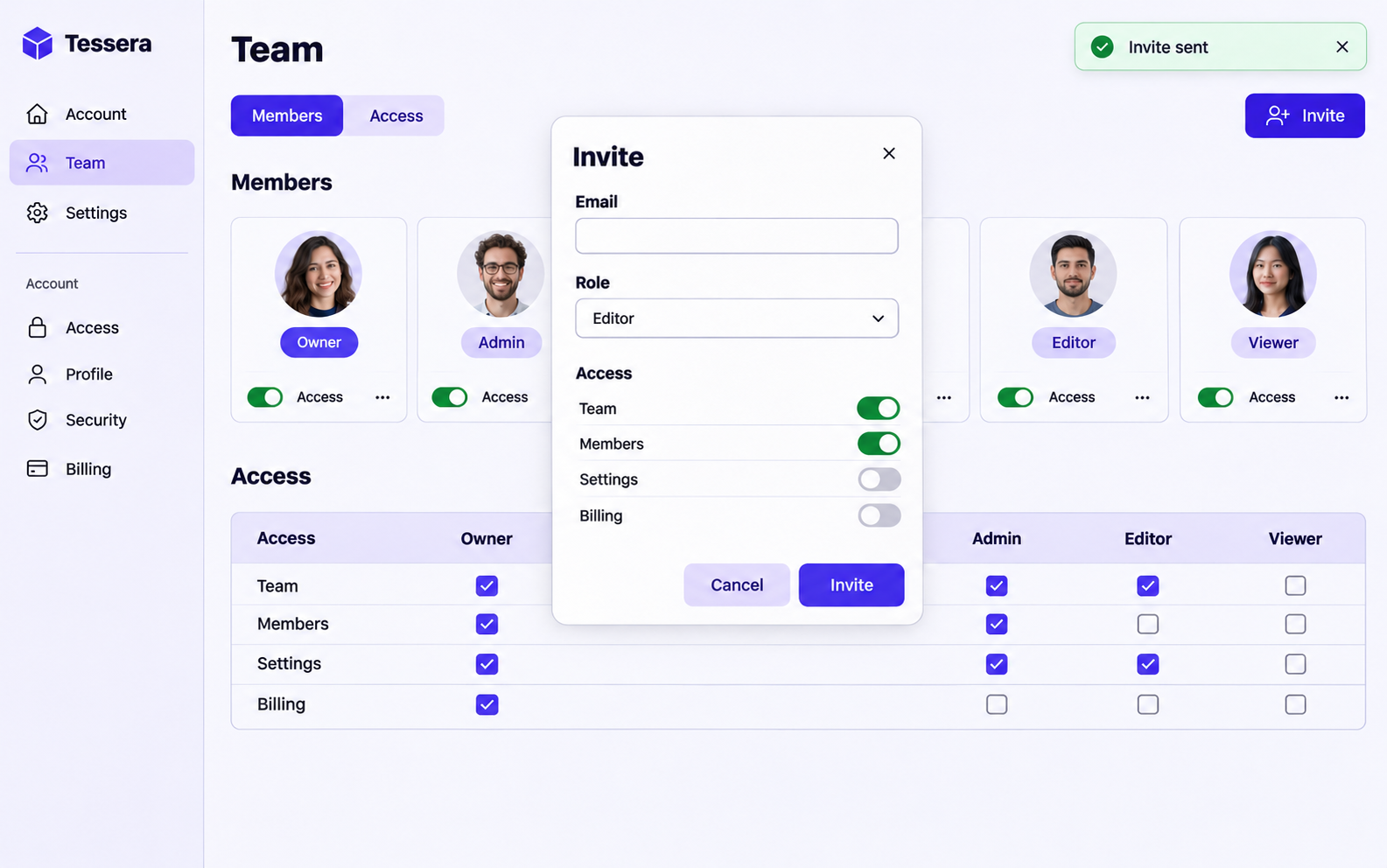
Access should match the assignment. A partner adapting a service page may need published styles and assets without permission to edit the master library. A partner building new product components may need a contribution branch and a named reviewer. Agree those permissions before the first production task.
Review an exception as a system decision
Suppose a new reporting screen needs a date-range control that the library does not cover. The partner should identify the gap and show why existing patterns do not solve it. Your team can then approve a contained local solution or a reusable system addition. That decision affects testing, documentation and future maintenance.
Avoid making the partner responsible for silently reconciling design and code drift. If the Figma library and repository disagree, name which behaviour the current scope should follow and who resolves the broader mismatch. This keeps a delivery task from becoming an undefined system overhaul.
Make acceptance criteria fit the existing product
Check token usage, naming, state coverage and behaviour against the product conventions. Review how the deliverable fits nearby screens, not just whether it matches the supplied frame. Include practical maintenance questions: can the internal team update content, understand the variants and locate the source of a shared value?
CEVUNO can work from an existing design system and propose additions where the scope requires them. Bring the actual library and technical context into the estimate. Familiarity with Figma or React alone does not eliminate the onboarding needed to understand your product’s decisions.
Explore CEVUNO’s design, development and creative services or browse the portfolio concepts to see the type of production we can discuss with your agency.
Make room for your next project.
Tell us what your agency needs to produce. We’ll review the scope, estimate the work and confirm availability together. Monthly partnerships and one-time projects are available.