Landing Page Design for Agencies: From Brief to Clear Action
Plan a landing page around audience intent, message hierarchy, evidence and a clear next step, with design and production working together.
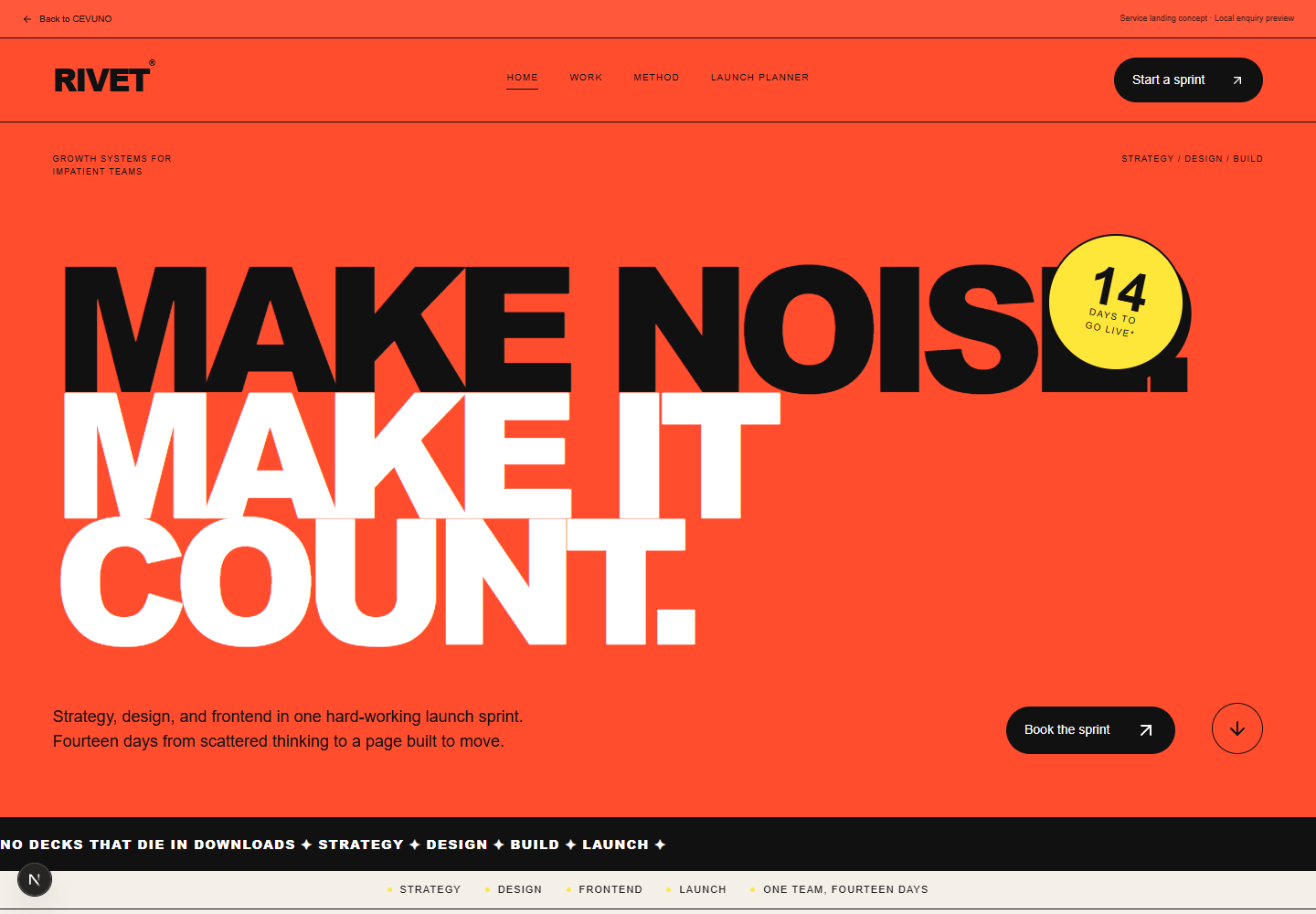
A landing page gives a specific audience a focused route to a specific action. Its job is not to hold everything a company could say. For an agency, the challenge is often translating a broad campaign brief into a page that visitors can understand quickly while still supplying the context they need to make a decision.
Match the page to the arrival context
A visitor following an advertisement may already know the offer, while someone arriving from an informational article may need more explanation. Agree the traffic context before designing the hero. Keep the headline, main visual and first call to action consistent with the promise that brought the visitor there.
Define one primary action, such as requesting a consultation or submitting a qualified enquiry. Secondary links can provide context, but they should not obscure the main route. A page can be focused without becoming aggressive or withholding important information.
Build the argument in a readable order
Move from the problem to the offer, then explain the process, relevant evidence and next step. Use only claims the client can substantiate. A polished quote or performance figure should never be invented to fill a proof section.
Consider what the reader needs on a small screen. Short paragraphs, descriptive headings and purposeful images help people scan, while form labels and useful validation make the final action easier to complete.
Define production and measurement separately
A design partner can produce page structure, responsive layouts and frontend implementation. Your agency should separately confirm campaign setup, analytics, consent requirements and the success measure. A visually strong page does not guarantee a conversion increase.
CEVUNO can support landing page design and development through an approved project or monthly production scope. Bring the audience, offer, available assets and intended action so the first estimate reflects the actual work.
Build a message map before a wireframe
For B2B landing page design, list the questions a qualified visitor is likely to bring. Who is this for? What does the service include? How does the engagement work? What information do I need to submit? Your wireframe should give those questions a deliberate order. Otherwise, it is easy to design attractive sections that leave the buying decision unexplained.
Consider an illustrative agency campaign for a professional software service. A visitor arriving from a problem-focused advertisement may need a clear explanation of the offer before a long feature grid. A returning visitor comparing vendors may value process, integration constraints and a useful enquiry route. The same visual layout should not be assumed to fit both situations.
Treat proof as a content input, not a decorative section
Ask the client what evidence can be published: a real project example, approved testimonial, product demonstration or documented capability. If none is available, explain the process and show the product honestly rather than inventing numbers. A conversion-focused landing page should reduce uncertainty through credible information, not manufacture urgency or trust signals.
This also affects visual production. A real interface screenshot can explain a software workflow, while a generic workplace photo may only create atmosphere. Choose the image for the question it answers. Provide a caption where a mockup, fictional example or concept could otherwise be mistaken for live product evidence.
Make the form part of the offer
A button saying “Get started” is incomplete if the next screen does not explain what happens. Decide whether the visitor is requesting a quote, booking a conversation or submitting a project brief. Ask only for information needed at that stage, and explain the response process without promising a turnaround the business cannot support.
The form scope should cover validation, loading, delivery failure and confirmation. If your agency handles campaign measurement, agree which event represents a meaningful enquiry rather than counting every button click as a lead. Traffic quality, offer fit and the sales process all influence outcomes; design alone cannot guarantee a conversion rate.
Separate launch requirements from later experiments
Before launch, make the primary journey complete and understandable. After launch, a campaign owner can examine the questions and behaviours observed in actual traffic. Changes to the headline, form or page sequence should test a specific idea. Repeatedly changing several major elements at once makes it harder to understand what the team learned.
CEVUNO can support the page design, responsive frontend implementation and later approved adaptations. If testing, analytics setup or copy development are needed, include them explicitly in the brief. A focused first release with accurate content is a better foundation than an oversized page waiting for proof, copy and stakeholder alignment.
Use an objection map to write better sections
Before adding another visual section, ask which objection it resolves. A service buyer may be uncertain about scope, quality, scheduling, confidentiality or what happens after submitting a form. A page that addresses those questions can be more useful than one repeating broad benefits in several different layouts.
For an agency production offer, scope can be explained through services and examples; quality through relevant work and a clear process; scheduling through an honest availability statement; and the next step through a useful enquiry form. Each piece of content earns its place by reducing a specific uncertainty.
This is also a way to use search language naturally. A visitor looking for B2B landing page design services wants to understand the deliverable and the working model. Answer that intent in the heading and content, then use related terms where they explain the work. Repeating the same phrase in every section does not make the explanation more useful.
A practical structure for a service landing page
The following sequence is an example, not a universal conversion formula. Adapt the order to what the audience already knows and the evidence the business can actually supply. If a section does not help the decision, remove or combine it rather than filling it with generic copy.
| Section | Visitor question | Useful content |
|---|---|---|
| Opening | Is this for me? | Audience, offer and primary action |
| Service explanation | What do I get? | Deliverables and boundaries |
| Relevant example | Can they do this kind of work? | Honest project or concept evidence |
| Process | How will this work? | Brief, estimate, review and handover |
| Commercial context | What should I plan for? | Engagement model and scope conditions |
| Enquiry | What happens next? | Clear form and response process |
Keep campaign claims and production claims separate
Your agency can commission a well-designed page without knowing how every future visitor will respond. The production scope can promise the agreed deliverable and checks; it should not promise a particular commercial result unless there is an appropriate basis and agreement. Use specific language about the design work rather than presenting a conversion outcome as an automatic feature.
After launch, combine the page with a measurement plan owned by the campaign team. Review actual traffic, enquiry quality and the downstream sales conversation. CEVUNO can support approved changes to the interface or creative assets as the team learns, with each request estimated according to its scope.
Explore CEVUNO’s design, development and creative services or browse the portfolio concepts to see the type of production we can discuss with your agency.
Make room for your next project.
Tell us what your agency needs to produce. We’ll review the scope, estimate the work and confirm availability together. Monthly partnerships and one-time projects are available.